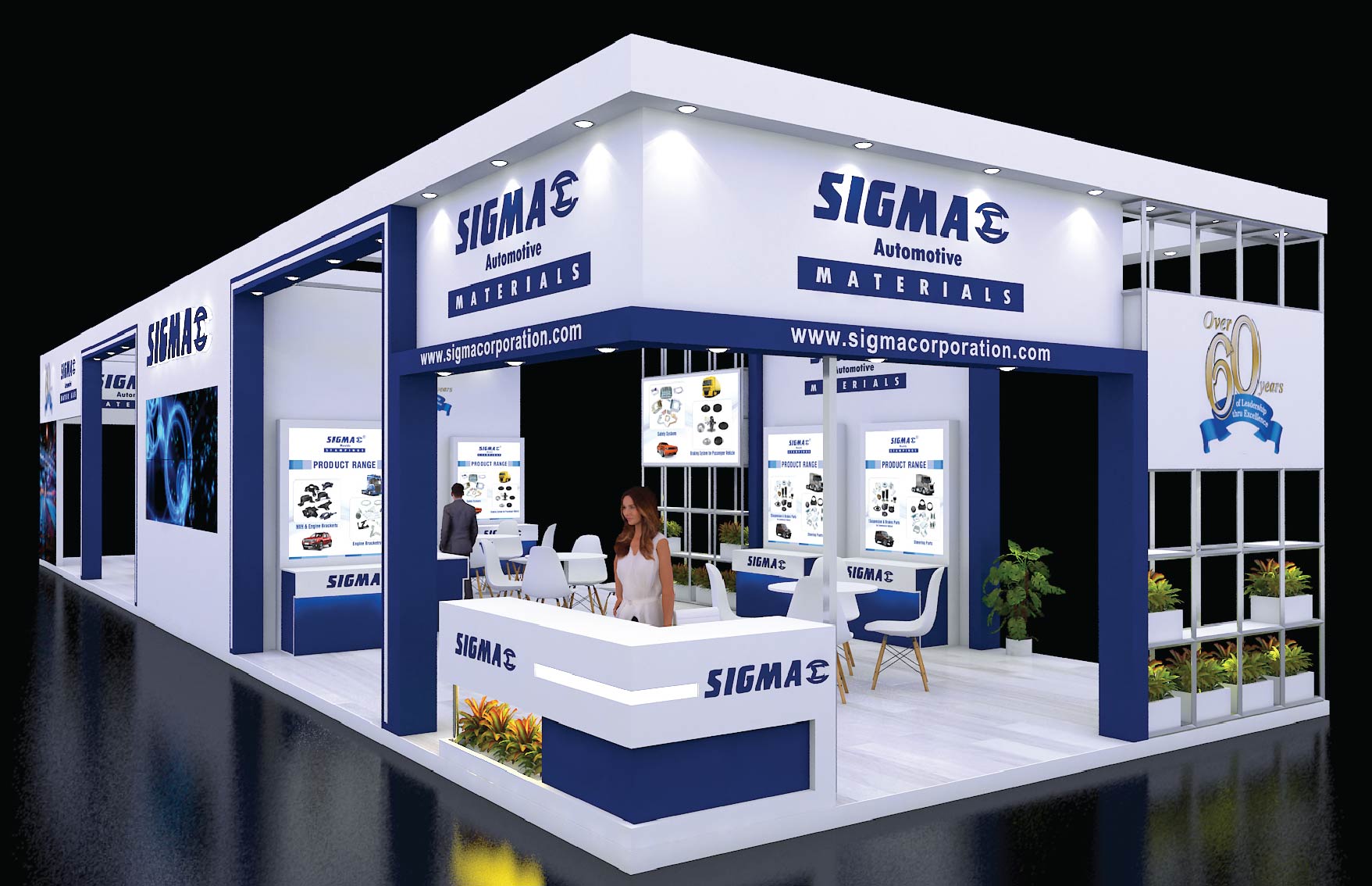
If you design your booth right, people will not be able to resist stopping. Clean design, compelling visuals, and great lighting – they all work. But one thing that is frequently forgotten? Designing sets the stage. Everything after that is up to the people behind the scenes.
Your booth may look amazing compared to the others on the floor. However, without proper training, you won’t be able to make anything out of this advantage. Visitors won’t be converted into clients. They’ll leave empty-handed.
Design establishes visibility. It gets people’s attention and engages them. However, it does not create connections or conclude conversations.
People do not remember booths; they remember engagements.
An unprepared team will find even the most frequented booth difficult to manage, while a properly prepared team will have no problem even with the simplest booth. Design gets people’s attention; people seal the deal.
The moment that a visitor walks up to you, they have formed an impression.
Posture, eye contact, tone, all these count more than memorised scripts.
The professionally trained staff will know how to:
Without such skills, the staff will appear too submissive or too intimidating.
Nothing undermines trust like indecision.
Questions are meant to be answered. If the employees resort to generalities, their trustworthiness suffers.
Training will ensure that everyone on the team:
This is not about memorising lines. This is about communicating.
It doesn’t always have to take a lot of time, but every interaction must have a direction.
What untrained employees lack is the ability to keep their discussion focused on something relevant. What trained employees learn is how to direct the discussion and make it move toward its objective, whether it be a demonstration, follow-up, or capturing leads.
It includes:
It is not always the same type of customer who visits the organisation. Some are genuinely interested. Some are just browsing around. Some might not even be relevant to the services provided by the company.
Proper training enables employees to identify the type of customer from the outset.
For instance,
Knowing how to respond in each case saves time and improves overall efficiency.
Exhibition days are long. Energy levels fall. Attention wanes. But for visitors, each encounter feels like the first.
A properly trained team knows how to sustain its energy throughout the day. They understand how to remain engaged even when there are fewer people around.
It’s the little details: the way they stand, how they talk, and their willingness to start a conversation.
These are not inherent qualities; they are behaviours that can be learned.
Collecting contact information may seem deceptively simple, but it is often the weakest part.
If the visitors feel pushed too much, they might be against it or even think it unnecessary altogether. The staff themselves might be shy to ask because they think that it will be embarrassing.
But here is where the training comes in handy because it will teach you how to:
If you do it properly, everything will seem to follow the conversation naturally.
Booths do not function through a single person alone; a few people from the team need coordination.
Without coordination, the following can happen:
Training holds importance in determining responsibilities and positions. It helps decide the actions of the people accordingly.
Consistency is key. The communication should be consistent among all team members at all times.
Otherwise, this inconsistency will lead to guests receiving conflicting information.
Such consistency can be accomplished through proper training.
Design and training are inseparable; they complement each other.
Good design facilitates interaction. Effective training helps leverage that interaction. For instance, an open booth can encourage guests to interact, but ineffective training could make that open space useless. In the same way, a demonstration area would be futile without proper guidance for guests to visit.
This is one concept that experienced exhibition providers understand. Companies like Fusioncorp pay attention to both design and functionality, rather than focusing solely on design.
Even excellent teams are susceptible to avoidable pitfalls:
They may not be serious weaknesses, but they greatly impair efficiency.
Sure, a booth is visually appealing, but people create an impression. The moment you have well-trained, confident, and on-point staff, everything becomes possible. If not, the most impressive booth won’t yield results either.
There is more than just designing your booth to make a show stand out. How the team operates within the booth will play a significant role here as well.
Also Read: The Psychology of Booth Design: Attracting Visitors
Also Read: How to Choose the Right Exhibition Stand Type
Also Read: How 3D Design is Revolutionizing Exhibition Stands
Also Read: How to Design an Eye-Catching Exhibition Booth
Also Read: The Rise of Interactive AV (Audio-Visual) in Exhibitions
Also Read: Virtual vs. Physical Exhibitions: What Works Best?
Also Read: How AI is Transforming Event Engagement
Also Read: Mistakes to Avoid in Exhibition Planning