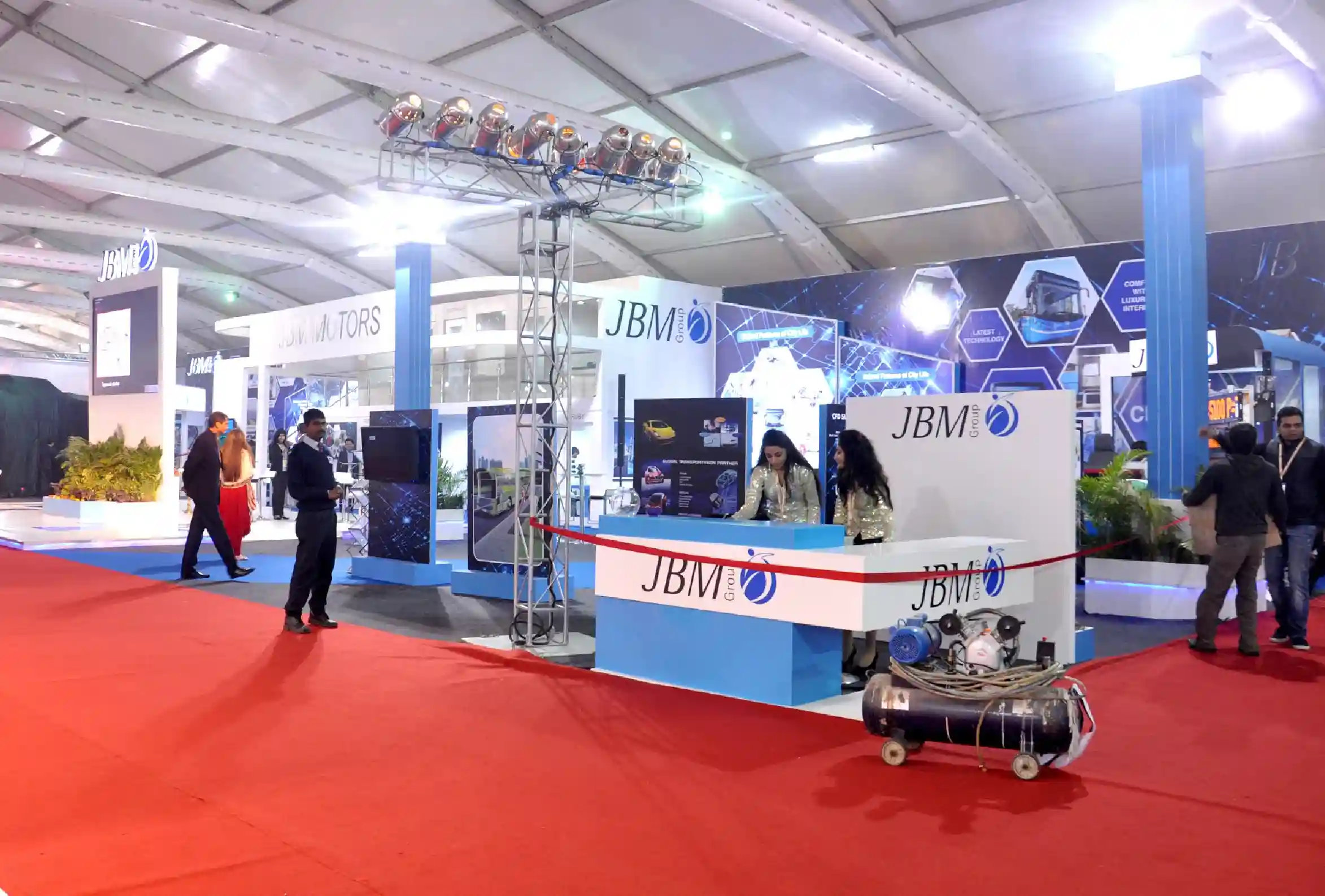
Are you looking forward to exhibiting your brand at a trade show and are still unsure whether to opt for modular stands or custom stands? Many companies are facing the same dilemma before entering a trade show. A booth is not just a booth; it is the first impression that visitors get about your brand. A booth is so important for your brand that it can leave a long-lasting impression on visitors. This is the reason the debate between modular and custom stands is so common among companies. In this blog, we are trying to explain the real differences between these two types of stands so that you can choose the best for your brand.
Before moving forward, many are eager to ask, "What are modular exhibition stands?"
A modular stand is defined as a booth that is composed of different components, which can be rearranged and used for different purposes. These components include frames, panels, shelves, lights, and display sections. The most significant advantage of using modular stands is that they are flexible and can be reused for different events.
Many companies that participate in multiple trade shows choose this type of stand for their brand. These components are easy to transport and install. Companies can rearrange the components according to the space available for the booth at the trade show.
Another reason for choosing modular stands is the cost. Companies can save money on the cost because they can use the booth for multiple events. Small and medium-sized companies are often looking for cost-saving options, and they choose this type of stand for their brand.
Another advantage is that it saves time in setting up. For example, if a company is taking part in more than one exhibition in a particular year, it is easier for the exhibition team to set up since it is made of standard parts.
Custom stands are created from scratch. They are designed in line with the brand’s identity and the marketing campaign’s theme. Every aspect of the custom stand is created specifically for the brand. This includes its design, shape, colors, and lighting style.
Big companies use custom stands if they intend to create a huge impact at exhibitions. They help in making brands stand out in exhibitions where many people are taking part. For example, people can easily identify a company’s stand since it is designed in line with its personality.
However, custom stands can be expensive. For example, since it is custom-made for a particular event and designed specifically for that company, it takes more time and effort to set it up.
One of the most asked questions by companies is about costs. For example, is it better to use reusable stands or custom stands?
For businesses that frequently participate in exhibitions, it is possible that modular exhibition stands may become a cost-effective solution in the long run. Businesses can actually reuse the same components in various exhibitions. Only the graphics or branding panel would need to be changed.
On the other hand, custom exhibition stands can be effective for companies that seek to create a huge impact at an event. For example, companies may use exhibitions to launch new products or enter new markets. In such cases, custom stands may come in handy, as they may help create more impact.
Cost is another factor that is determined by what companies seek to achieve in exhibitions. For example, if companies seek to create awareness and use exhibitions for storytelling, custom stands may be effective in achieving company goals.
Another question that people ask when searching for answers online is how to attract more visitors to their stands. Does design really matter in exhibitions?
The answer is that custom and modular stands can work well in terms of attracting visitors. For example, custom stands tend to create more impact at first glance. This is because of their unique design and creative elements. Visitors tend to stop at stands that offer something unique and different in terms of design and look.
Modular stands can work well in exhibitions too. For example, companies may use modular stands in exhibitions and create a huge impact through effective design and planning. For example, companies may use effective lighting and design to create a modern look for their stands. It is not only design that makes stands effective in terms of visitor attraction. Companies may use various elements, such as staff and product displays, to create more impact at exhibitions.
Flexibility is another factor that companies consider when seeking stands for exhibitions. Companies may use various stands for exhibitions depending on how flexible they are.
The design of a custom stand normally fits a specific layout. Custom-designed exhibition stands are normally made according to the layout of a specific exhibition. The use of such stands in another exhibition could require rebuilding some of their parts.
Businesses that participate in several exhibitions in different places, such as other cities and countries, normally prefer using modular stands for this reason.
Brand identity is one of the most powerful reasons for businesses to invest in exhibition stand design.
Custom-designed exhibition stands give designers a chance to be fully creative. They can build a structure that represents a brand’s story, values, and product category. This is a great way to create a lasting impression for visitors.
Modular stands, which are more modern, also give businesses a chance to create a powerful brand identity. They can use several elements, such as graphics and lighting, to create a lasting impression for visitors. The choice between the two options will depend on whether brand identity is a critical aspect of your overall marketing strategy.
The decision between using a modular stand and a custom stand for an exhibition depends on a number of factors, such as brand objective, budget, and overall strategy. Both options are powerful tools for businesses that participate in several events. The most critical aspect of choosing between a modular stand and a custom stand is to select a stand that reflects your overall brand objective and expectations. If you are a brand that seeks a professional and effective way to participate in several events, you should partner with experienced organizations such as Fusion Corporate Solution and explore our exhibition stand work.
Modular stands are reusable and made from pre-built components, while custom stands are designed from scratch specifically for a brand and a particular event.
Modular stands are usually better for startups as they are cost-effective, reusable, and easier to set up for multiple exhibitions.
Custom stands are worth the investment for brands looking to create a strong visual impact, launch products, or build a unique brand presence at high-profile exhibitions.
Yes, with the right design, lighting, and graphics, modular stands can achieve a modern and premium look while still being cost-efficient.
Modular stands are easier to transport because they are made of lightweight, detachable components that can be packed and reused.
Your decision should depend on your budget, frequency of exhibitions, brand goals, and the level of impact you want to create at the event.
Yes, modular stands allow branding through interchangeable graphics, panels, and lighting, making it easy to update designs for different events.
Custom stands are generally designed for a specific event, but some elements can be reused with modifications depending on the design.
Modular stands are quicker to install because they use pre-fabricated components, reducing setup time at the exhibition venue.
Large brands often prefer custom stands for major events to create a strong impact, but they may also use modular stands for frequent exhibitions.
Also Read: The Psychology of Booth Design: Attracting Visitors
Also Read: How to Choose the Right Exhibition Stand Type
Also Read: How 3D Design is Revolutionizing Exhibition Stands
Also Read: How to Design an Eye-Catching Exhibition Booth
Also Read: The Rise of Interactive AV (Audio-Visual) in Exhibitions
Also Read: Virtual vs. Physical Exhibitions: What Works Best?
Also Read: How AI is Transforming Event Engagement
Also Read: Mistakes to Avoid in Exhibition Planning