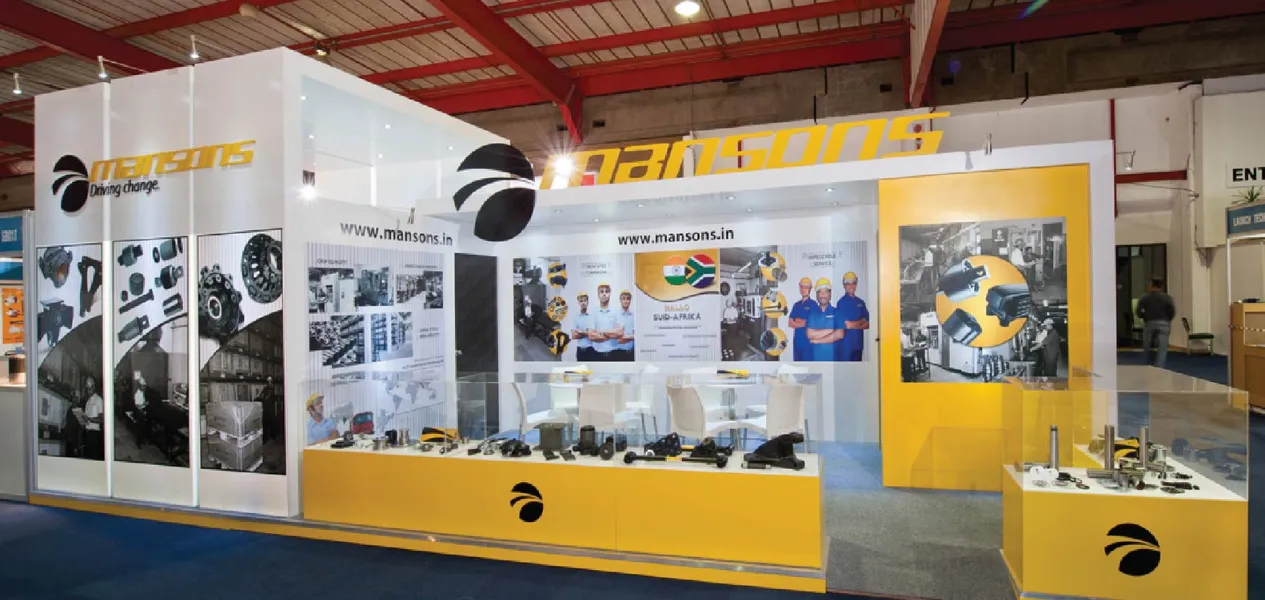
Exhibitions have undergone tremendous changes over the last decade or so. Today, it is no longer about one big show in a year. In fact, some are showcasing their message in one city and then shifting to another, and in some cases, even another country altogether. This, in turn, has brought great changes in how one configures their booth.
While custom-built stalls may look impressive in a traditional sense, they can be unwieldy to ship, expensive to rebuild, and difficult to modify to suit different environments. This is where modular expo design is fast emerging as a game-changer.
At its core, modular design is actually all about constructing exhibition stands using interchangeable modules. Of particular note here is that panels, frames, counters, lighting, and display units can all interface in several ways.
Instead of creating an entirely new booth for each occasion, the elements of the booth can be rearranged for use in different floor sizes, layouts, or designs. In other words, a booth designed for a large floor space can be used for a smaller floor space by merely rearranging the components of the booth.
Perhaps the greatest advantage of modular design is its scalability. Any business evolves, marketing strategies and goals change, and exhibitions are a reflection of that. What if a business requires a small 9-square-meter stall one year, but a much larger presence the following year?
With conventional construction, that may mean going back to square one. With modular construction, it is easier to increase space. It is possible to add on additional panels, display space, or meeting space without having to abandon the original investment.
This ability to scale up gradually also reduces budgeting issues and overall costs.
Anyone who has spent time working on the actual floor of an exhibition will know just how tight these setup times can be.
The reason for this is the nature of modular structures, which are made for efficiency and speed; the parts are precision-engineered to assemble quickly and easily, minimizing the need for customization or adjustments on-site, which can lead to delays and problems.
Equally important is dismantling, which means that when a booth can be easily dismantled and packed systematically, logistics management is simpler.
It is not easy to keep the branding cohesive and similar for all events, as sometimes there can be variations in colors, finishes, and layouts, particularly if building booths from scratch.
Modular systems are also an answer to this problem. Because the same basic elements are combined, the visual look and feel of the booth will continue to be similar. The visuals can be updated while keeping the overall structure the same.
This consistency helps build brand recognition, particularly for those organizations with multiple exhibitions each year.
Now, sustainability has also entered the sphere of the events industry. Conventional booths involve the use of materials that are used once and then discarded.
Also, with a system of modularity, waste management is minimized because reusing materials becomes a common practice. Buildings are designed to last longer than just a single event. Hence, a part of a building can be replaced while the others remain.
Transport efficiency can also improve. Components that are compact in nature may consume less fuel during shipment. The path forward for companies looking for a solution to reduce their footprint on the environment.
Each location has a different configuration. For instance, the height of the ceiling, as well as the points of entry, will be varied. However, a fixed booth design will not be effective everywhere.
Modular designs enable exhibitors to move their stands depending on the environment. This allows for the adjustment of meeting spaces, display spaces, and the creation of open spaces for movement.
Such flexibility also proves useful in experimenting with different engagement models. Interactive zones, product demos, or lounge areas may be added or removed depending on the nature of the audience.
Although initial investment costs for modular systems may appear comparable to traditional booths, the long-term cost benefits of being reusable for future fabrication costs and installation time savings are substantial.
Similarly, maintenance work is easier because if a panel is damaged, it is easier to replace it rather than rebuild a structure. In the process of various exhibitions, these savings can far outweigh the cost of the initial investment.
While there is a modular design involved, planning is needed in this regard. The materials, engineering, and transport logistics can all impact its overall performance.
Towards the final stages of preparation, many exhibition companies work in collaboration with specific partners who understand design and execution for exhibition displays. Some of these companies, such as Fusion Corporate Solution, help businesses plan modular displays that meet different needs for aesthetics, durability, and flexibility, especially for recurrent events.
The future of exhibitions is likely to be more dynamic than ever before. More brands are participating in exhibitions than before, and sustainability will become a necessity rather than a choice.
The expo design that features modularity fits well within such an evolving environment. This allows companies to scale up, down, or get a facelift without having to start over building their footprint anew.
In the end, the true benefit of modular design isn't about saving money or making life easier. It's about being able to concentrate on the real essence of exhibitions, interacting with people, exchanging ideas, and creating relationships while the framework takes care of everything in the background. By partnering with experts like Fusion Corporate Solution, you can also explore their exhibition stand work to ensure a seamless and impactful exhibition experience.
A well-designed modular exhibition stand can last for multiple years if maintained properly. Since components are reusable and replaceable, businesses can continue using the structure across several exhibitions.
Yes, modular stands allow visual customization through interchangeable graphics, lighting elements, branding panels, and display units while maintaining the same structural framework.
Modular booths are highly suitable for international trade shows because they are designed for easy packing, transportation, and reassembly in different venue environments.
Common materials include lightweight aluminum frames, engineered panels, fabric graphics, laminated boards, and modular lighting systems designed for durability and repeated use.
Yes, modular structures are engineered to accommodate LED screens, touch displays, product demo zones, and other interactive technologies without requiring structural redesign.
Yes, modular components are designed to be dismantled and packed efficiently, making storage and inventory management simpler between events.
Since modular stands are flexible in structure, they can be adjusted to meet height restrictions, safety guidelines, and space regulations imposed by different exhibition venues.
Yes, modular layouts can incorporate enclosed meeting rooms, semi-private discussion zones, or open lounge spaces depending on event objectives and available space.
Custom-built stands are typically created for one-time use, while modular stands are designed with reusable components that can be reconfigured for multiple exhibitions and varying floor sizes.
Yes, modular systems can be a cost-efficient solution for startups because they allow gradual scaling and reuse, reducing the need for rebuilding booths for every event.
Also Read: The Psychology of Booth Design: Attracting Visitors
Also Read: How to Choose the Right Exhibition Stand Type
Also Read: How 3D Design is Revolutionizing Exhibition Stands
Also Read: How to Design an Eye-Catching Exhibition Booth
Also Read: The Rise of Interactive AV (Audio-Visual) in Exhibitions
Also Read: Virtual vs. Physical Exhibitions: What Works Best?
Also Read: How AI is Transforming Event Engagement
Also Read: Mistakes to Avoid in Exhibition Planning