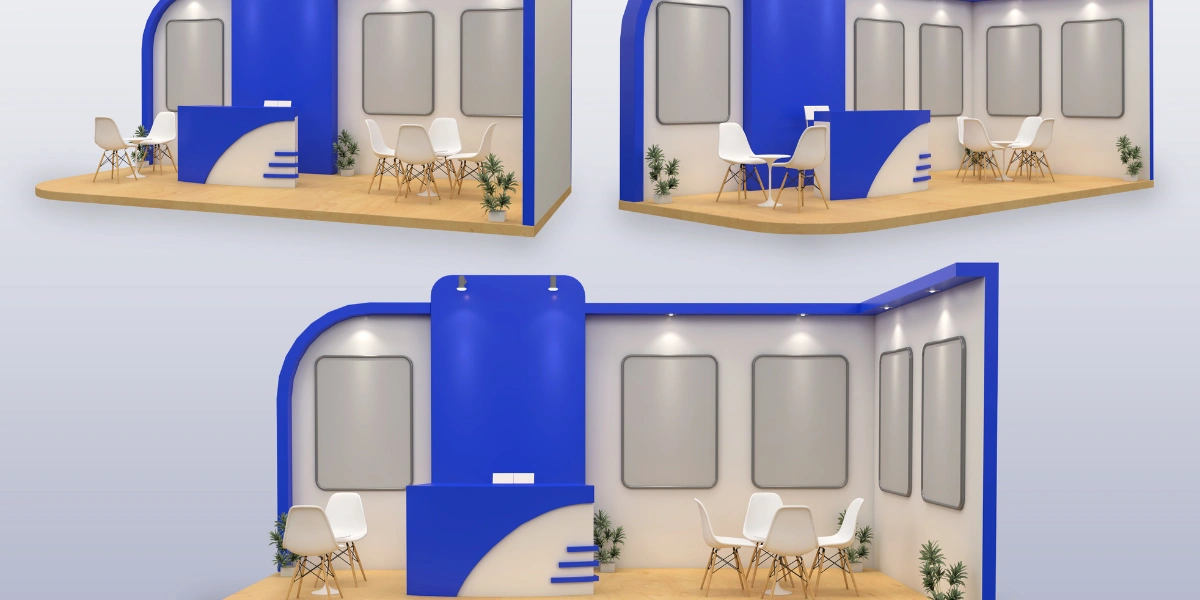
An exhibit can be visually breathtaking yet fall flat when it really counts. Great lighting, strong graphics, and an enviable location – it doesn’t matter. The important thing is straightforward. Does the environment compel visitors to pause, converse, and hand over contact information?
The change is that design goes beyond mere exposure. It means conversions.
Before deciding on colours or designs, determine what constitutes a "lead". Is it a quick scan to make contact? A demo request? An in-depth discussion?
Once the goal is established, the design will be much simpler. Everything in the booth must reinforce the goal. Otherwise, the booth may look great but lack purpose.
People make decisions to stop by in just a few seconds. Looks matter, of course, but it is just the first factor.
A more effective approach includes being clear and curious. Instead of bombarding your potential customers with a lot of information, pick the most important piece of it that you need to convey.
In other words, your display should answer one important question that any potential customer is asking: “Why should I stop here?”
Another frequent error is viewing the booth as a stationary exhibition space.
In actuality, the booth is an active area in which individuals walk around, stop, and engage.
The arrangement must encourage movement.
One needs to design a convenient entrance into the booth. No obstacles, such as high countertops, should obstruct movement at the entrance.
Once inside, the visitors will naturally gravitate towards the interaction areas – demos, conversation topics, or digital displays.
Lead capture is not passive; it needs engagement.
Engagement must appear seamless rather than artificial.
For instance, avoid using cumbersome processes and use a quick method such as:
The smoother the engagement process, the more likely you are to capture leads.
However, employees should position themselves strategically, not hiding behind counters but interacting with prospects.
Interactive displays have become a staple of modern booths. The problem with this is that it won’t help much when adding them in an unorganised way.
The technology must be used to shape the customer experience.
A demo video will catch their attention while showing them what the product is about. An interactive display can gather their information in the meantime.
The thing here is that everything must align with the engagement.
If a booth feels crowded, people won’t enter. If it is too empty, it will lack direction.
The trick is to have enough open space to feel inviting but also to have areas with defined purposes.
Examples include the following:
This way, you can control both the movement and the discussion.
Remember one crucial factor: the staff forms an essential component of the booth design.
If the staff does not gear up to generate leads, even the best booth design will be a waste.
The staff must:
The placement of the staff is also important; they shouldn’t be sitting in clusters or huddling up.
Design provides the chance, but people turn it into reality.
Information will tend to get shared when the visitor believes that they are getting value out of the deal.
This does not have to involve give-aways all the time. These include:
This is because sharing contact information seems like a logical follow-up.
The largest drop occurs at the last stage, when the visitor is required to give their particulars.
If it seems tedious and cumbersome, they will simply move on.
It must be kept short and sweet:
The goal is to reduce friction. The smoother the process, the higher the conversion.
The design does not stop once the booth is erected; even the events that take place during the show itself need attention.
Measure:
All this helps in optimising the booth design for future events.
Every brand has a unique audience and target. That is why an all-purpose booth will never work effectively for you.
Designing your booth based on your unique needs helps ensure the design works in line with your objectives.
Professionals know how to balance form and function. Brands such as Fusioncorp specialize in creating booths that not only look great but also deliver results.
Even well-designed booths may fail because of tiny details.
Examples of some of the most frequent ones are:
This may not always be evident during the design phase, but it will definitely be noticeable during setup.
Event lead generation doesn’t just happen within the event itself; what comes afterwards is just as important.
Follow-up emails need to be delivered promptly and relevantly. Lead information needs to be structured and used. This is made easy by a properly designed trade show booth.
An attractive booth grabs attention. A good booth generates leads.
The key is in purpose. It’s all about generating engagement when you put every aspect together for that purpose.
It’s about making sure everything makes sense and is clear, straightforward, and of value.
A well-planned exhibition booth design attracts visitors, encourages interaction, and creates opportunities to collect customer information. The design should focus on visitor engagement rather than only visual appearance.
Defining clear objectives helps create a booth that supports specific goals such as product demonstrations, meetings, or lead collection. Every design element can then be planned according to the desired outcome.
A smart booth layout creates a comfortable flow for visitors, allowing them to enter easily, explore displays, interact with products, and connect with the team without feeling crowded.
Quick digital sign-ups, QR code scans, tablet registrations, and simple enquiry forms are effective lead capture methods. A smooth process encourages more visitors to share their details.
Technology such as interactive displays, digital presentations, and product demos can improve visitor engagement while creating better opportunities to collect leads and understand customer interests.
Trained staff members help convert booth visitors into potential leads by starting meaningful conversations, answering questions, and guiding visitors toward the next step.
Visitors are more likely to provide their information when they receive value through product demonstrations, useful insights, consultations, or solutions that address their needs.
An effective exhibition booth should balance attractive design with functionality. A visually appealing booth should also create opportunities for visitor interaction and business conversations.
Common mistakes include focusing only on appearance, overcrowding the booth with information, creating complicated lead capture processes, and not preparing staff properly for visitor interactions.
Fusion Corporate Solution creates exhibition booth designs that combine creativity, functionality, branding, and visitor engagement strategies to help businesses attract audiences and generate meaningful leads.
Also Read: The Psychology of Booth Design: Attracting Visitors
Also Read: How to Choose the Right Exhibition Stand Type
Also Read: How 3D Design is Revolutionizing Exhibition Stands
Also Read: How to Design an Eye-Catching Exhibition Booth
Also Read: The Rise of Interactive AV (Audio-Visual) in Exhibitions
Also Read: Virtual vs. Physical Exhibitions: What Works Best?
Also Read: How AI is Transforming Event Engagement
Also Read: Mistakes to Avoid in Exhibition Planning