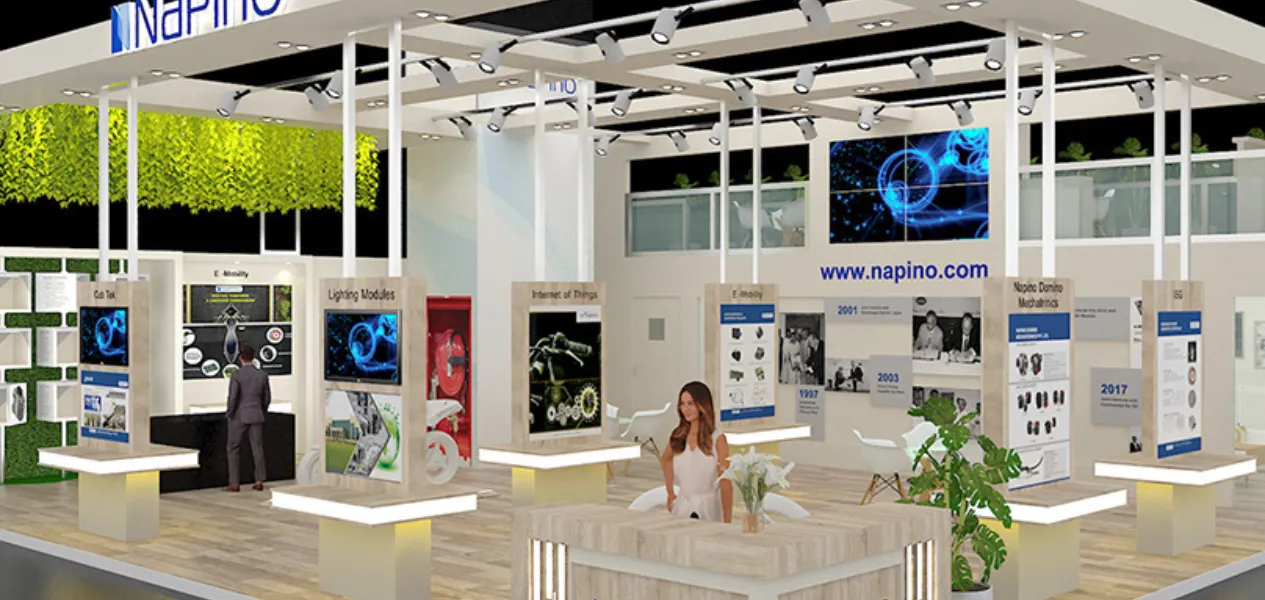
The choice of materials determines the feel of the exhibition stand even before anyone reads a word on the stand. Comments could be made on graphics, lighting, etc., at a later stage, but involuntary reactions would be the first impressions: solid or frail, high-end or temporary only, calm or chaotic. This, to a great extent, is the import of material choice.
This is where many exhibition projects and stands go wrong: the choice of materials is often made out of habit, vendor comfort, or what was used last time. Rarely are materials picked based on proper comprehension regarding how the audience actually moves, touches, and reads spaces on an overcrowded exhibition floor.
Let’s slow down and observe the four most used materials for exhibition stands, not classified into a catalogue but rather by the way they manifest, the places they might go wrong, or the considerable damage they might cause in undermining the experience.
Wood conveys effort even at first glance. Wood gives the impression that it’s been planned. Wood gives an impression that it’s stable and serious. This is why it is common among those brands that seek to give an experience of stability and quality. Wood is non-reflective and hence not very noisy. Instead, it is soft, and this helps reduce the temporary nature that any exhibition will automatically carry.
However, wood has some limitations. It is heavier, takes longer to install, and is not very forgiving in case of last-minute changes. Poor woodworking finishes are easily detected. Panels that are not properly aligned or edges that are chipped and feature uneven textures just mar the whole wood effect.
Wood goes wrong if it is hurried or if it is just for decoration. Half-hearted wood is even worse than just not using it.
Aluminum continues to be the backbone of trade show exhibits, despite being largely unseen or perhaps seen only in their architectural applications, as frames, supports, and trusses characterized by their lightness and strength.
The biggest advantage of aluminum is adaptability. This helps in rapid assembly and reconfigurability. This is why it is so common at large events where the construction time is tight and safety standards are stringent.
The only issue with the material is the cold look. When you look at aluminum on its own, its industrial look is quite apparent. This material does not evoke an emotion on its own since, most of the time, aluminum is only utilized in the form of an aluminum stand, which might not evoke any particular emotion.
Aluminum has difficulties when it is asked to do it all in terms of visual identity. Function should serve and support design, not replace it.
Fabric has changed exhibition design more than most people realise. Lightweight tension fabrics allow large surfaces without heavy structures, which opens up scale without bulk. Fabric stands feel open and modern. They diffuse light beautifully, reduce glare, and allow seamless graphics that don’t break at panel joints. That’s why fabric is often used in island booths and large backdrops.
However, fabric demands precision. Poor tensioning creates wrinkles. Low-resolution prints look cheap at scale. And fabric can feel too temporary if not balanced with stronger materials.
Fabric works best when:
Fabric struggles in high-contact areas. It’s better for backdrops and overhead elements than counters or touchpoints.
LED technology has become more accessible, which is both a blessing and a problem. Used well, LED walls and strips create movement, attract attention, and allow content to change throughout the day. They’re powerful tools in crowded halls where static visuals struggle to compete.
Used poorly, LEDs overwhelm everything. Too bright. Too fast. Too noisy. Visitors stop seeing the message and only notice the distraction. LEDs should never be added just because they’re available. They need restraint and purpose.
LED fails when it becomes the story instead of serving it.
The most effective exhibition stands rarely rely on a single material. They combine strengths. Wood adds warmth. Aluminium provides structure. Fabric softens scale. LED adds motion. The key is balance.
Problems arise when materials compete instead of complementing each other. A stand with wood, fabric, aluminium, and LED can feel rich or confused. The difference lies in hierarchy and intent. Good material combinations feel deliberate. Bad ones feel like leftovers.
This part often gets overlooked. People lean on wood counters more comfortably than metal ones. They spend more time in spaces that absorb sound instead of reflecting it. They avoid areas that feel harsh or overly bright.
Material choice directly influences how long visitors stay and how open they feel to conversation. This isn’t subjective. It’s behavioural. A stand designed only for visual impact but not physical comfort loses engagement quickly.
Expensive materials don’t automatically perform better. Poor execution kills even the best material.
A well-finished aluminum and fabric stand can outperform a badly executed wood structure. What matters is alignment between material, purpose, and execution quality. Choosing fewer materials and executing them well almost always beats doing too much.
Materials also determine what happens after the exhibition. Aluminum systems and fabric graphics are easier to reuse. Wood often requires rebuilding or refurbishment. LEDs need maintenance and content updates. If exhibitions are frequent, material choices should support long-term use, not single-event impact.
Materials are not decoration. They are silent communicators. They tell visitors whether a brand is careful or careless, established or experimental, welcoming or intimidating. When material choices align with brand intent and visitor behaviour, the stand starts working before anyone speaks.
This is why experienced teams like Fusioncorp treat material selection as a strategic decision, not a finishing step. Drawing from insights gained through executed exhibition projects and hands-on delivery, they ensure that structure, surface, and experience all point in the same direction.
For brands planning their next build, working with a specialised exhibition stand design company helps translate material choices into spaces that don’t just look good, but perform well on the exhibition floor.
Wood is commonly preferred for premium exhibition stands as it conveys stability, warmth, and high perceived value when finished and executed properly.
Yes, aluminum is ideal for large exhibition booths due to its strength, lightweight nature, and ability to support lighting, fabric graphics, and LED elements efficiently.
High-quality tension fabric systems are durable for multi-day exhibitions when properly installed and are best used for backdrops and large visual surfaces.
When used with controlled brightness and simple content, LED displays help attract attention and increase visitor engagement without overwhelming the space.
Yes, combining wood, aluminum, fabric, and LED works well when each material has a clear role and visual hierarchy within the stand design.
Wood and reinforced composite surfaces are best for high-contact areas as they feel solid, absorb sound, and provide better visitor comfort.
Aluminum frames and fabric graphics significantly reduce installation and dismantling time compared to fully custom wooden structures.
Aluminum systems and fabric graphics are highly reusable, while wooden elements may require refurbishment depending on design and finish.
Also Read: The Psychology of Booth Design: Attracting Visitors
Also Read: How to Choose the Right Exhibition Stand Type
Also Read: How 3D Design is Revolutionizing Exhibition Stands
Also Read: How to Design an Eye-Catching Exhibition Booth
Also Read: The Rise of Interactive AV (Audio-Visual) in Exhibitions
Also Read: Virtual vs. Physical Exhibitions: What Works Best?
Also Read: How AI is Transforming Event Engagement
Also Read: Mistakes to Avoid in Exhibition Planning